

Energy & Environment
A new study finds that economic liberalization is not at odds with protecting the environment. After examining 49 cases of sustained economic liberalization since 1970, economists Justin Callais, Vincent Geloso, and Alicia Plemmons found that, compared with similar countries that did not liberalize, reforming countries saw GDP per capita rise 16 percent within ten years, no effect on total greenhouse gas emissions, and a modest decline in air pollution deaths."
Kangaroo Island, a large island off the Southern coast of Australia, has been fully cleared of invasive feral pigs, setting the stage for a recovery of native species.
Recent research led by the Wildlife Conservation Society identified 64,000 square miles of coral reef that may be able to survive rising ocean temperatures. After identifying 42 variables that predict how well reefs weather climate change, such as proximity to cold water currents and cyclone exposure, the researchers used a machine learning model to comb through 45,000 coral field surveys and estimate which reefs are likely to retain their coral cover through 2050. The result is a global map of resilient reefs that could help conservationists determine the areas they should prioritize protecting.
Food & Hunger
India, the world’s largest rice exporter, is entering a potentially poor monsoon season with its granaries full. Following a series of strong harvests, India has accumulated more than five times its target level of national rice reserves, giving the government a large buffer if future harvests disappoint.
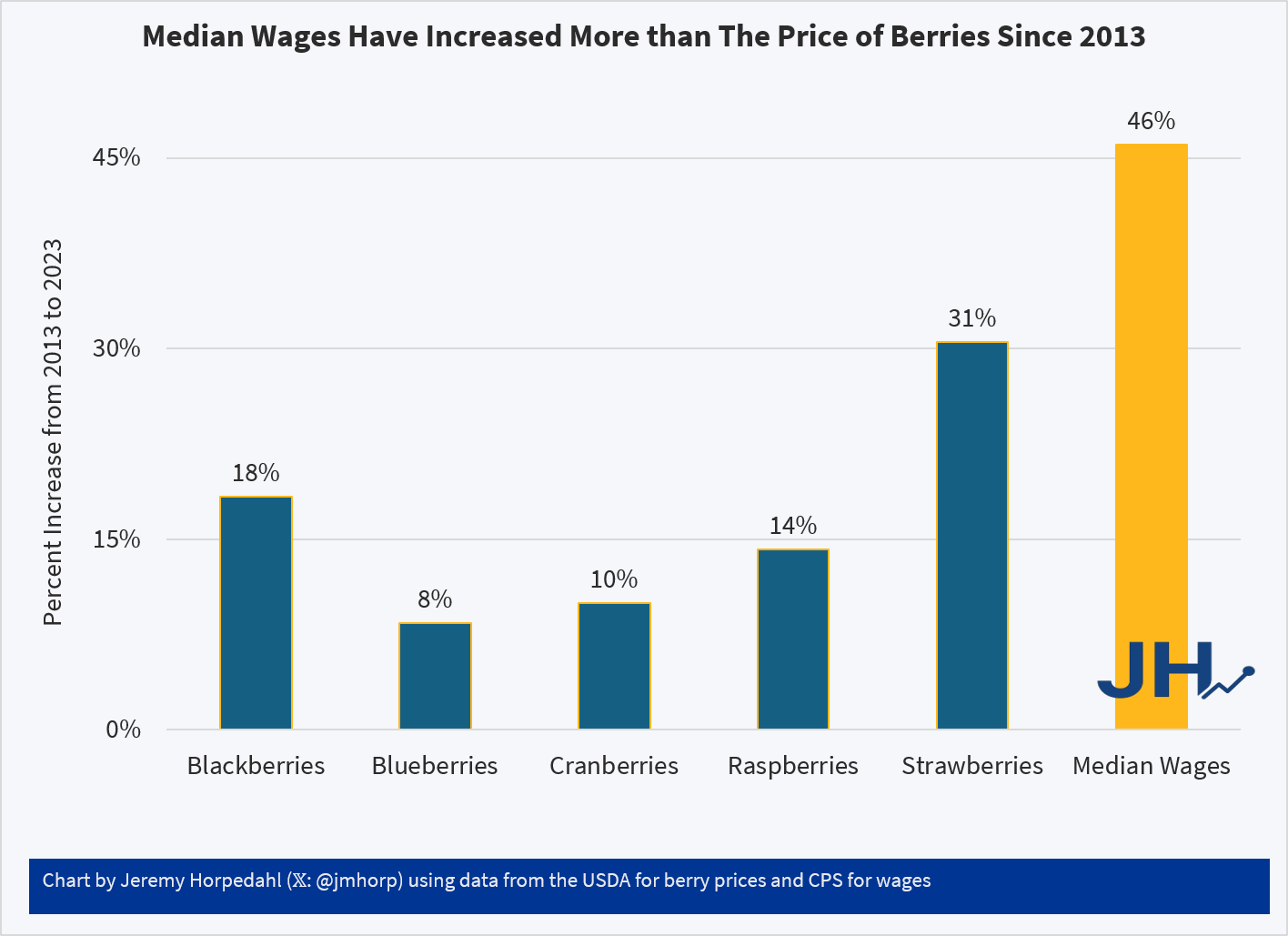
Despite increased demand (particularly from voracious children), berries are becoming more affordable in the United States. The economist Jeremy Horpedahl finds that between 2013 and 2023, median wages in the United States grew much faster than berry prices, reducing the working hours required to afford the fruits.

Health & Demographics
According to provisional CDC data, the US infant mortality rate fell to an all-time low in 2025, reaching fewer than 5.4 infant deaths per 1,000 live births.
A recently published analysis of data from the Global Burden of Disease study found that annual deaths from intestinal infections fell by 66 percent between 1990 and 2023, from 3.69 million to 1.27 million. The researchers credit wider vaccination, improved water and sanitation systems, and broader access to oral rehydration therapy.
A new mosquito-breeding facility in France is producing 1.5 million sterile mosquitoes per week to help control the population of invasive tiger mosquitoes, which can carry diseases like dengue, Zika, and chikungunya. The owner, a startup called Terratis, plans to scale up production to 40 million mosquitoes per week within two years. For comparison, Brazil’s large Wolbachia-infected mosquito factory can produce 100 million mosquito eggs per week.
Scientists have developed a maternal blood test that can detect thousands of serious fetal genetic conditions by analyzing DNA fragments in the mother’s bloodstream. In a study of 565 pregnancies, the test found more than 97 percent of the clinically relevant genetic variants detected by more invasive prenatal testing, suggesting doctors may be able to get much of the same information without sticking needles into wombs.
Midjourney, a firm best known for AI image generation, has announced that it is developing a full-body ultrasound scanner that can map the entire human body in about 60 seconds, potentially turning advanced internal imaging into a routine service.
Science & Technology
Currently, imaging satellites function as orbital sensors: they collect vast amounts of data and beam it back to Earth for interpretation. Artificial intelligence could turn them into orbital analysts. In a recent demonstration, a satellite with a vision-language model onboard was able to analyze imagery in orbit, hinting at a future where satellites autonomously “watch” the Earth for meaningful changes, such as wildfires, floods, crop failures, or troop movements.
The US National Oceanic and Atmospheric Administration is now operating the country’s first dedicated space-weather satellite, which will help forecasters track solar phenomena that can disrupt power grids, communications, aviation, satellites, and space travel. The new satellite, called SOLAR-1, will observe the sun continuously and send images back to Earth within 30 minutes, much faster than the roughly eight hours required by older instruments.
Most of the molecular machinery inside cells cannot be directly observed by humans. The most advanced cryo-electron microscopes can reveal the structure of about 10 percent of human proteins when they are isolated, and only about 1 percent when looking inside real cells. That may soon change. Researchers at Biohub and UC Berkeley have demonstrated a new method that dramatically boosts the contrast of cryo-electron microscope images, making faint biological structures much easier to see. The researchers estimate that the technology could make more than half of functionally important proteins visible.
Violence & Coercion
Child marriage and domestic violence continue to decline in India. A recently published national survey found that 20.1 percent of women aged 20-24 were married as children in 2023 and 2024, down from 23.3 percent recorded in the previous survey conducted between 2019 and 2021. The same survey found that the share of married adult women who reported experiencing spousal violence dropped from 29.2 percent in 2019-21 to 22.3 percent in 2023-24.